
Wildfire Season in the San Fernando Valley: Is Your Home Insurance Enough?
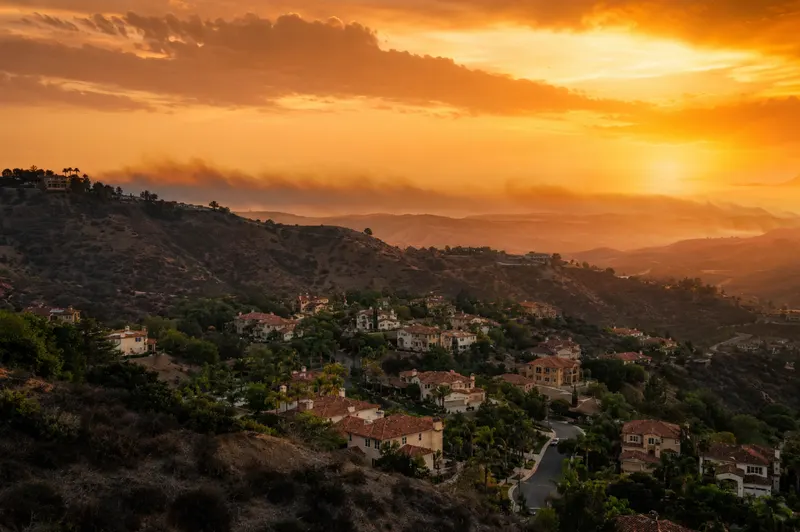
Every August, the hills that ring the San Fernando Valley turn from green to gold, and the Santa Ana winds start showing up in the weather forecast more often than the sun. For homeowners in Woodland Hills, Calabasas, Chatsworth, and the canyon communities along the Santa Susana Mountains and Santa Monica Mountains, that shift isn't just scenery. It's the start of wildfire season.
The last few years have made one thing clear: the policy you bought five, or even two, years ago may not reflect the risk your home actually carries today. Insurer non-renewals, tightening underwriting rules, and a reshaped California insurance market mean a lot of Valley homeowners are carrying coverage gaps they don't know about, until they need to file a claim.
Here's what to know before this year's fire season peaks.
Which Parts of the San Fernando Valley Carry the Highest Wildfire Risk
Wildfire risk in the Valley isn't uniform. It's driven by proximity to wildland urban interface (WUI) areas, the zones where homes back up against open brush, chaparral, or steep terrain, and by CAL FIRE's Fire Hazard Severity Zone (FHSZ) maps, which local building and insurance requirements are increasingly tied to.
Homes most exposed tend to sit in or near these areas:
- Woodland Hills and the western Valley foothills, where neighborhoods press up against the Santa Monica Mountains and Topanga State Park's wildland edges. See our local Woodland Hills homeowners insurance page.
- Calabasas, much of which falls within a Very High Fire Hazard Severity Zone due to its canyon topography and dense chaparral, and which has direct memory of major fire events in the surrounding hills. More on Calabasas homeowners insurance.
- Chatsworth, Porter Ranch, and Granada Hills, sitting under the Santa Susana Mountains, an area with a long history of wind driven fire activity.
- Sylmar and the northeastern foothills, where steep grades and seasonal Santa Ana wind corridors combine.
- Bell Canyon, Hidden Hills, and other canyon adjacent communities, where limited access roads and heavy vegetation add to the risk profile insurers evaluate.
If your property sits inside or near a CAL FIRE Very High Fire Hazard Severity Zone, that classification alone can affect your renewal terms, your premium, and in some cases your eligibility for standard market coverage at all. It's worth checking your address against the current CAL FIRE hazard maps. Many homeowners are surprised to learn their zone designation has changed since they last checked.
What a Standard Homeowners Policy Actually Covers, and Where It Stops
Most standard homeowners policies (HO-3 forms, which are the most common in California) do cover wildfire as a named peril. But "covered" doesn't mean "fully covered," and this is where gaps quietly form. Our home insurance page breaks down how each part of the policy works.
Generally included:
- Dwelling coverage (Coverage A): rebuilding the structure itself, up to your policy limit.
- Other structures: detached garages, fences, and sheds.
- Personal property: belongings lost or damaged in the fire.
- Loss of use / Additional Living Expenses (ALE): costs for temporary housing while your home is unlivable.
- Personal liability: if you are sued for injury or damage to other people's property.
Where Standard Policies Commonly Fall Short
Underinsured rebuild costs
After a major, high demand fire event, construction material and labor costs spike across the region. A dwelling limit that looked adequate last year can fall thousands, or tens of thousands, of dollars short of actual rebuild cost.
ALE time and dollar caps
Many policies cap additional living expenses at 12 to 24 months or a fixed percentage of dwelling coverage, often too short if permitting and rebuilding stretch past two years, which has become common after large scale events.
Defensible space and code upgrade shortfalls
If your home needs to be rebuilt to current fire and building code, ordinance or law coverage (often a small add on, not automatic) may be the only thing standing between you and paying the difference out of pocket.
Non-renewal risk itself
Coverage that exists today isn't guaranteed at your next renewal. Insurers have been reassessing wildfire exposure at the portfolio level, and a non-renewal notice citing wildfire risk has become one of the most common reasons Valley homeowners end up shopping for new coverage, sometimes with little advance notice.
The takeaway: having a policy is not the same as having the right policy for a high hazard zone property.
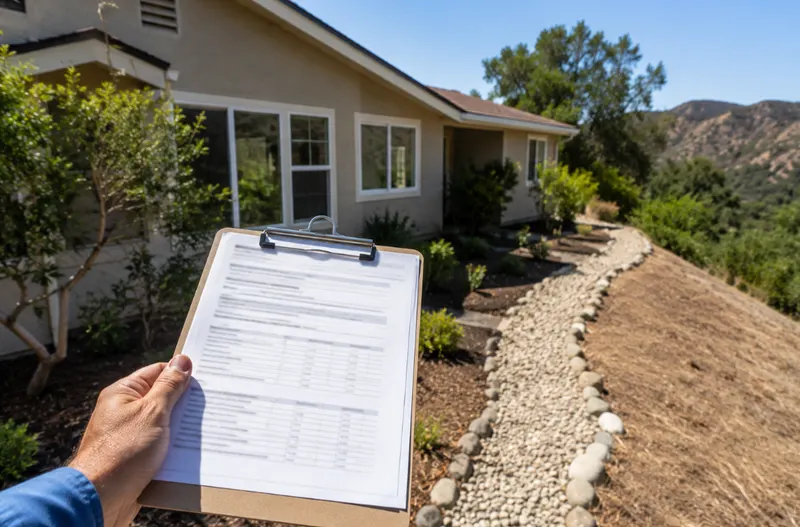
The California FAIR Plan: What It Is, and What It Isn't
If your home has been declined by standard carriers, or dropped at renewal, you've likely encountered the California FAIR Plan, the state's insurer of last resort. It's a good tool to understand even if you're not on it yet, because it shapes what backup coverage looks like in high risk ZIP codes.
What the FAIR Plan is: A privately administered pool, established by California law and regulated by the California Department of Insurance, that pools risk among admitted carriers so homes that can't get standard coverage still have access to basic fire insurance. It is not a state agency, and it was never designed to be a permanent replacement for a full homeowners policy. It's meant as a bridge back to the standard market.
What it currently covers, and its limits: As of 2026, FAIR Plan dwelling coverage can go up to roughly $3 million, with anything above that limit requiring a separate excess policy. It covers fire, lightning, and internal explosion, along with some expanded protections added in recent policy updates (including smoke damage and vandalism). What it typically does not cover on its own: liability, theft, and non-fire water damage. That gap is significant. A FAIR Plan policy alone can leave you with zero liability protection if someone is injured on your property.
What's changed recently: The FAIR Plan has been under real financial strain following major fire losses, and the state has responded with both relief and cost increases:
- New state legislation has expanded the FAIR Plan's ability to issue bonds and access lines of credit, intended to reduce reliance on sudden post-fire assessments passed on to policyholders.
- Regulators approved a substantial statewide rate increase for FAIR Plan policies taking effect in the second half of 2026, with wildfire exposed properties likely seeing above average increases.
- Commercial and residential coverage limits have been expanded to help stabilize the market and encourage private carriers back into wildfire prone areas over time.
The practical implication: if you're on the FAIR Plan, you almost certainly need a Difference in Conditions (DIC) policy layered on top of it to restore the liability, theft, and water damage protection a standard homeowners policy would otherwise include. Relying on the FAIR Plan alone is one of the most common, and most costly, coverage gaps we see among Valley homeowners.
How to Close the Gaps Before Fire Season Peaks
Here are a few simple examples that will make a big difference:
- 1 Confirm your rebuild cost, not just your market value Ask for a current replacement cost estimate, and make sure your dwelling limit reflects today's construction costs in your ZIP code, not the number from your last renewal.
- 2 Add extended or guaranteed replacement cost coverage If your carrier offers extended or guaranteed replacement cost coverage, get it.
- 3 Check your ALE limit and duration If rebuilding could realistically take longer than your policy's cap, ask about extending it.
- 4 Add ordinance or law coverage Code driven rebuild costs are increasingly common after wildfire losses, and this keeps them from coming entirely out of pocket.
- 5 If you're on the FAIR Plan, pair it with a DIC policy This is the single most important gap to close for liability and theft protection.
- 6 Document your home and belongings now A dated inventory, photos, and receipts make claims faster and more accurate after a loss.
- 7 Invest in home hardening and defensible space Ember resistant vents, Zone 0 clearance around the structure, and roof and gutter maintenance can improve your standing with insurers and, in some cases, qualify you for mitigation discounts.
- 8 Revisit your coverage annually, not just at renewal notices Wildfire risk classifications and insurer appetite in the Valley have been shifting quickly. A policy review once a year catches gaps before a non-renewal notice forces the issue.
Get a Valley Specific Coverage Review
Wildfire exposure in the San Fernando Valley isn't one size fits all, and neither is the right policy. Whether you're rebuilding coverage after a non-renewal, weighing a FAIR Plan policy against a DIC wraparound, or simply making sure your dwelling limit still matches today's rebuild costs, a local review of your home insurance coverage is the fastest way to find out where you stand.
We work with homeowners throughout the Valley's higher risk communities, including Woodland Hills and Calabasas, to compare standard market options, FAIR Plan and DIC pairings, and mitigation discounts specific to each neighborhood's risk profile. You can see every community we serve on our service areas page.
If you're not sure whether your current policy is enough, that's exactly the conversation worth having before the next red flag warning. Reach out and we'll walk through it with you.
Not Sure Where Your Policy Stands?
A licensed California agent can review your dwelling limit, ALE cap, and FAIR Plan or DIC setup in one sitting. Start with a free quote, or explore our home insurance services first.
Frequently Asked Questions
Does standard homeowners insurance cover wildfire damage in California?
Yes. Most standard homeowners policies (HO-3 forms) cover wildfire as a named peril, including dwelling, personal property, and additional living expenses. The risk isn't whether fire is covered. It's whether your dwelling limit, ALE cap, and code upgrade coverage are enough to fully rebuild after a major loss.
What is the California FAIR Plan and who needs it?
The FAIR Plan is California's insurer of last resort for homeowners who've been declined or non-renewed by standard carriers, typically due to wildfire exposure. It provides basic fire coverage but excludes liability, theft, and non-fire water damage, which is why most FAIR Plan policyholders pair it with a Difference in Conditions (DIC) policy.
Can my home insurance be canceled just because I live in a high fire risk zone?
Insurers can choose not to renew a policy based on wildfire risk assessments, and non-renewal notices citing fire exposure have become common in Very High Fire Hazard Severity Zones across California. State law requires advance notice, but it doesn't guarantee renewal.
Is the FAIR Plan enough coverage on its own?
No. FAIR Plan policies only cover fire related perils. Without a supplemental DIC policy, you have no liability, theft, or water damage protection, a significant gap for most homeowners.
How do I know if my home is in a high wildfire risk zone in the San Fernando Valley?
You can check your address against CAL FIRE's Fire Hazard Severity Zone maps. Areas near the Santa Susana Mountains, Santa Monica Mountains, and canyon communities like Calabasas and Bell Canyon are more likely to fall into Very High Fire Hazard designations.
Will home hardening or defensible space lower my insurance premium?
It can. Some carriers and the FAIR Plan offer mitigation based discounts for verified upgrades like ember resistant vents, Zone 0 clearance, and fire resistant roofing, though the specific discount depends on your carrier and documentation.