
Northridge Landlords: A Guide to Liability & Property Coverage for Rental Units
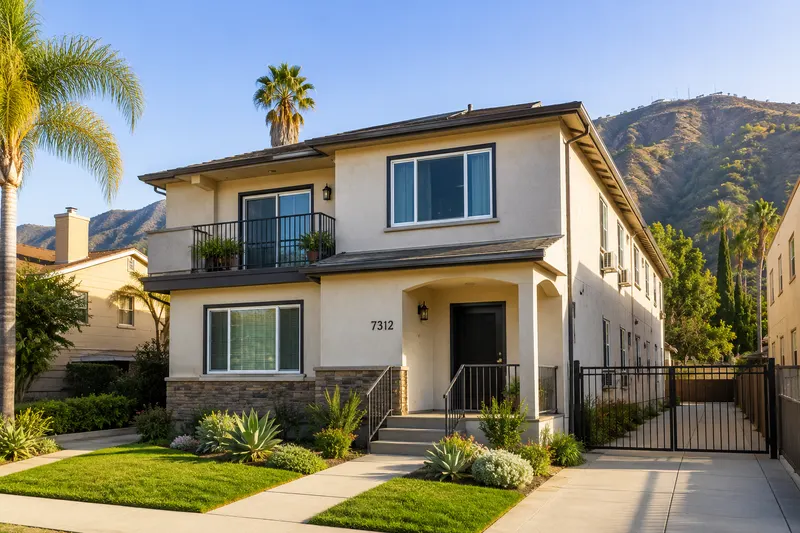
A standard homeowners policy will not protect you if you rent out a property in Northridge. Landlord insurance is the coverage you actually need: it protects the building, covers lost rental income, and defends you against liability claims when a tenant or guest is injured on your property.
This guide breaks down the risks Northridge landlords face, how landlord policies differ from homeowners coverage, how liability protection works for tenant injuries, and why bundling with general liability makes sense for owners with multiple units.
Why Northridge Landlords Need Specialized Coverage
Northridge sits in the heart of the San Fernando Valley, a rental-heavy pocket of Los Angeles anchored by CSUN and a steady flow of student and family tenants. That demand makes rental property a strong investment, but it also exposes owners to risks that a homeowners policy was never designed to cover.
Once a property is occupied by paying tenants rather than by you, the insurer views it differently. A home you live in and a home you rent out carry different risk profiles: different liability exposures, different causes of damage, and a different financial stake in the form of rental income. When your insurance company learns a home is tenant-occupied and still insured under a standard homeowners policy, a claim can be denied outright. That gap is exactly what landlord insurance closes.
Landlord-Specific Risks in the San Fernando Valley
Owning rental units in Northridge comes with a distinct set of exposures:
- Tenant and guest injuries. A visitor slips on a wet stairwell or a tenant trips on a cracked walkway and files a claim. As the owner of the property, you may be liable.
- Property damage from tenants. Accidental or negligent damage to the structure, a kitchen fire, water damage from an overflowing tub, a broken window, falls to you to repair.
- Loss of rental income. If a covered event like a fire or a burst pipe damages a unit so it becomes uninhabitable, you lose rental income while repairs are conducted. That rental income is a real, insurable loss.
- Natural hazards. The Valley faces earthquake risk along nearby faults and elevated wildfire exposure in the surrounding hills. Standard policies typically exclude earthquake and flood, so these need separate consideration. Our guide to wildfire season in the San Fernando Valley covers that exposure in depth.
- Vacancy risk. An empty unit between tenants can be a target for vandalism or undetected water leaks, and many policies treat extended vacancies differently.
Understanding these risks is the first step. Matching them to the right policy is the second.
Homeowners vs. Landlord Insurance: What's the Difference?
This is the single most important distinction for any rental property owner to understand. The two policies look similar on paper but protect very different situations.
What Each Policy Actually Covers
What a homeowners policy covers
A homeowners policy is built for an owner-occupied residence. It includes the structure, your personal items, liability for incidents involving you and your family, and temporary housing costs if you are forced to move. The core assumption baked into the policy is that you live there.
What a landlord policy covers
A landlord policy, sometimes called a dwelling or rental property policy, is built for a home someone else lives in. It generally covers the dwelling and other structures (the physical building plus detached garages or fences), landlord liability when a tenant or guest is injured and sues you, loss of rental income while a covered repair makes the unit unlivable, and owner-owned property like appliances or furnishings you provide in a furnished rental.
The main drawback
Landlord policies do not protect your tenant's personal property. That's what a tenant's own renters insurance is for, which is why many Northridge landlords require it in the lease.
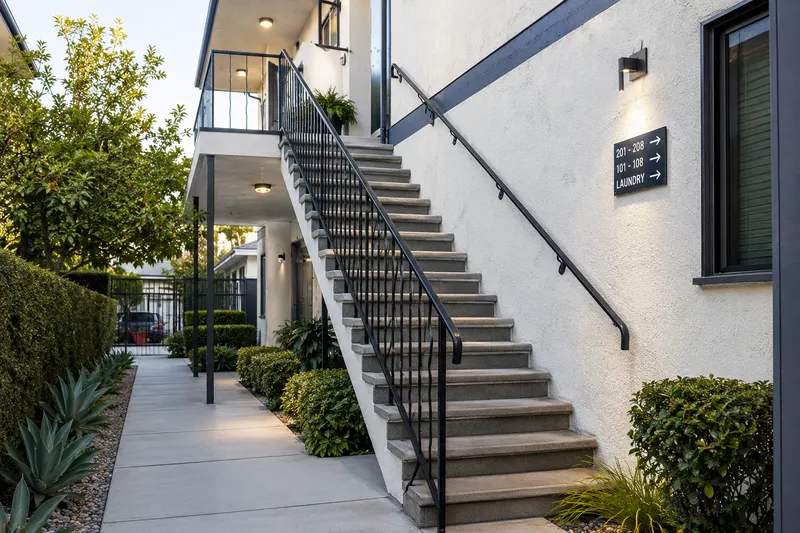
How Liability Coverage Protects You Against Tenant Injuries
Liability is where landlords are most financially exposed, and most often underinsured. If a tenant, their guest, or a delivery driver is injured on your property and you're found responsible, the costs can escalate quickly: medical bills, lost wages, and legal defense if the matter goes to court.
Landlord liability coverage handles two things. First, it covers the costs of a legal defense, which can be significant even if the claim is ultimately dismissed. Second, it covers settlements or judgments up to your policy limit.
Consider a realistic scenario. A tenant's visitor falls on a poorly lit exterior staircase and breaks a wrist. They pursue a claim for medical expenses and argue the lighting was inadequate. Without liability coverage, you would personally pay any legal fees and settlements. With it, your policy responds, and this is precisely the kind of everyday incident that makes coverage essential rather than optional.
For many Northridge owners, especially those with higher-value properties or multiple units, the base liability amount is a starting point, not a finish line.
Bundling with General Liability for Multi-Unit Owners
If you own more than one rental, a small apartment building, or operate your rentals as a business, a single landlord policy's built-in liability may not be enough. This is where general liability insurance becomes valuable.
General liability broadens your protection beyond a single property and beyond the standard limits of a dwelling policy. It's designed for the business side of being a landlord: the reality that renting property is an income-generating activity with its own legal exposure. For owners managing several units, bundling landlord property coverage with a general liability policy provides:
- Higher and broader liability limits across all your properties, not just one.
- Coverage for business operations related to managing and maintaining rentals.
- A foundation for an umbrella policy, which adds an extra layer of liability protection on top of your underlying limits.
Bundling also tends to be more cost-efficient and easier to manage than juggling separate, unconnected policies. An independent agent can structure your coverage so your properties, your liability, and your income are all protected under a coordinated plan rather than a patchwork.
Protect Your Northridge Rental the Right Way
Rental property is one of the best investments you can make in the San Fernando Valley, but only if it's protected correctly. The gap between a homeowners policy and a proper landlord policy is exactly where uncovered claims happen. As independent agents licensed in California, we shop 30+ A-rated carriers to match landlords with coverage that fits their properties, and explain every line before you sign. Explore business and general liability coverage, or start with a free quote.
Frequently Asked Questions
Do I need landlord insurance if I only rent out one unit in Northridge?
Yes. Even a single rental changes your risk profile enough that a homeowners policy may deny a claim once it's occupied by a tenant. Landlord insurance is the correct coverage for any property you rent to others, regardless of how many units you own.
Does landlord insurance cover my tenant's belongings?
No. A landlord policy covers the building and your own property, but not your tenant's furniture, electronics, or personal items. Many rental agreements require individual tenants to get their own renters insurance.
Is landlord liability coverage the same as general liability?
Not exactly. Landlord liability is built into a dwelling policy and covers injury claims tied to that specific property. General liability is broader business coverage, better suited to owners with multiple units or those who treat their rentals as a business.
Does a landlord policy cover earthquakes or floods in the San Fernando Valley?
Generally no. Earthquake and flood coverage are typically excluded from standard landlord policies and must be added separately, an important consideration given the Valley's fault lines and wildfire-related risks.
Should I require my Northridge tenants to carry renters insurance?
It's strongly recommended. Requiring renters insurance protects your tenant's belongings, can reduce disputes after a loss, and adds a layer of liability protection that keeps minor incidents from landing on your policy.